The global food system stands at a critical juncture. Faced with a rapidly growing population, the accelerating impacts of climate change, and the finite nature of arable land, the traditional methods of agriculture are proving increasingly unsustainable. In this landscape of challenge and opportunity, companies pioneering the future of food production are not just innovating—they are becoming essential. Infarmight, a leader in smart farming and controlled environment agriculture (CEA), is one such company, and its vision extends far beyond its current operational footprint. This post delves into Infarmight’s ambitious global expansion plans, a strategic roadmap designed to decentralize food production and bring sustainable, hyper-local produce to every corner of the world.
The Global Imperative for Smart Farming
The transition to smart agriculture is no longer a niche trend; it is a global imperative. The market data underscores this shift. The global smart agriculture market, valued at approximately $25 billion in 2024, is projected to more than double, reaching over $54 billion by 2030, reflecting a compound annual growth rate (CAGR) well into the double digits 1. This explosive growth is driven by several macro-level factors:
- Resource Scarcity: Smart farming techniques, particularly vertical farming, use up to 95% less water than conventional farming, a critical advantage in water-stressed regions.
- Climate Resilience: Controlled environments eliminate the risk of weather-related crop failure, ensuring stable yields regardless of external climate volatility.
- Food Security and Quality: By placing farms closer to consumers, smart farming drastically reduces transport times, leading to fresher, more nutritious produce and a significant reduction in food miles and spoilage.
Infarmight’s technology—a proprietary blend of IoT sensors, AI-driven climate control, and advanced hydroponics—is perfectly positioned to capitalize on these drivers. The company’s modular, scalable farm units can be deployed in urban centers, remote communities, or even harsh desert environments, offering a unique solution to localized food challenges.
Phase I: Strategic Market Selection—The “Where”
Infarmight’s expansion strategy is not a one-size-fits-all approach but a carefully calibrated process of strategic market selection. The company prioritizes markets where the need for its technology is highest and the regulatory environment is most conducive to innovation. The selection process is guided by a matrix of factors, including population density, import reliance, climate stress, and government incentives for sustainable technology.
Key Target Regions for Infarmight’s Initial Global Push
| Region | Primary Driver | Market Entry Strategy | Key Challenges |
|---|---|---|---|
| Asia-Pacific (APAC) | High population density, rapid urbanization, and limited arable land. | Joint Ventures (JVs) with local real estate developers and food distributors. | Navigating diverse regulatory frameworks and high initial energy costs. |
| Middle East & North Africa (MENA) | Extreme climate stress, severe water scarcity, and high reliance on food imports. | Direct Investment and Technology Licensing to government-backed agricultural projects. | Securing reliable, affordable renewable energy sources. |
| Northern Europe | Strong consumer demand for sustainable, locally-sourced food, and high labor costs. | Direct-to-Consumer (D2C) model with in-store farms and technology sales to existing greenhouses. | Intense competition from established CEA players. |
| Latin America | Need for resilient food supply chains in areas with political or economic instability. | Partnerships with NGOs and local agricultural cooperatives. | Infrastructure limitations and currency volatility. |
The Asia-Pacific region, in particular, is projected to exhibit the highest CAGR in the smart agriculture market, making it a cornerstone of Infarmight’s Phase I strategy 3. The combination of vast, dense urban centers like Singapore, Tokyo, and Shanghai, coupled with the logistical challenges of importing fresh produce, creates a perfect storm of demand for decentralized, vertical farming solutions.
Phase II: Tailored Entry Strategies—The “How”
A successful global expansion hinges on adapting the business model to local market realities. Infarmight employs a multi-pronged entry strategy, moving beyond simple export to establish deep, localized partnerships.
1. Joint Ventures and Local Partnerships (APAC Focus)
In high-growth, complex markets like APAC, Infarmight favors Joint Ventures (JVs). This model mitigates risk by partnering with local entities that possess invaluable knowledge of the regulatory landscape, supply chain infrastructure, and consumer preferences. For instance, a JV with a major Asian supermarket chain could see Infarmight’s modular farms installed directly within distribution centers or even on the retail floor, creating a powerful “farm-to-shelf” narrative.
2. Technology Licensing and Government Contracts (MENA Focus)
In regions like the MENA, where large-scale, state-backed food security initiatives are common, the strategy shifts to Technology Licensing. Infarmight can license its proprietary AI and climate control software to large-scale, government-funded vertical farms. This approach provides a high-margin revenue stream with lower capital expenditure, while positioning Infarmight as a critical technology enabler for national food independence.

3. Direct Investment and Operational Hubs (European Focus)
For mature markets with high consumer purchasing power, such as Northern Europe, Infarmight is pursuing Direct Investment to establish regional operational hubs. These hubs serve as centers for R&D, manufacturing of modular units, and direct sales operations. This allows for tighter quality control and a direct relationship with the end-consumer, which is crucial for building a premium brand identity centered on sustainability and freshness.
The Technological Backbone of Global Scale
Infarmight’s ability to scale globally is intrinsically linked to its technology. The company’s system is built on three pillars that ensure seamless deployment and operation across diverse geographies:
A. Modular and Containerized Infrastructure
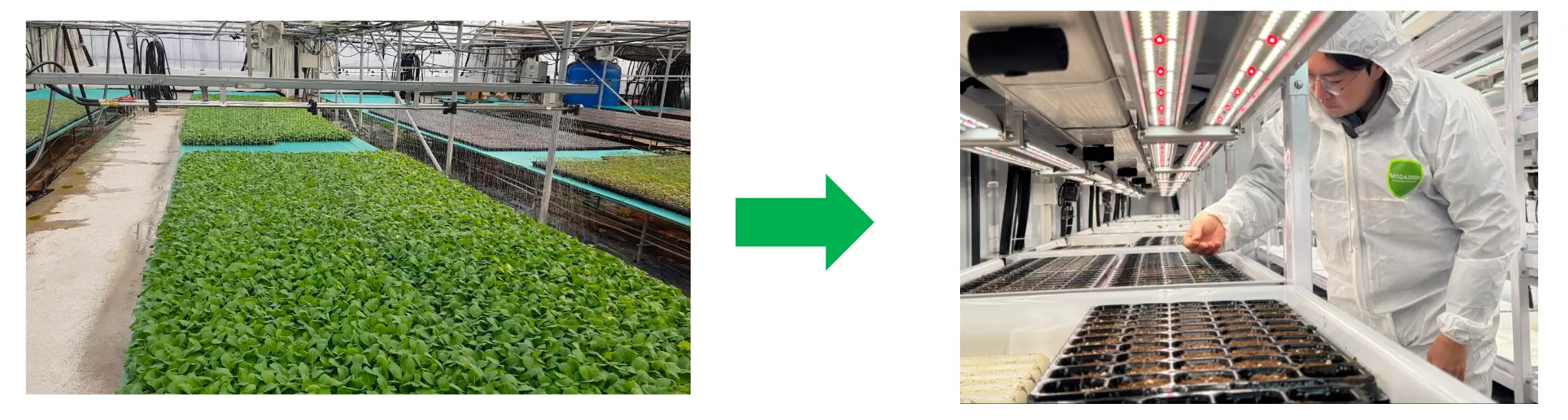
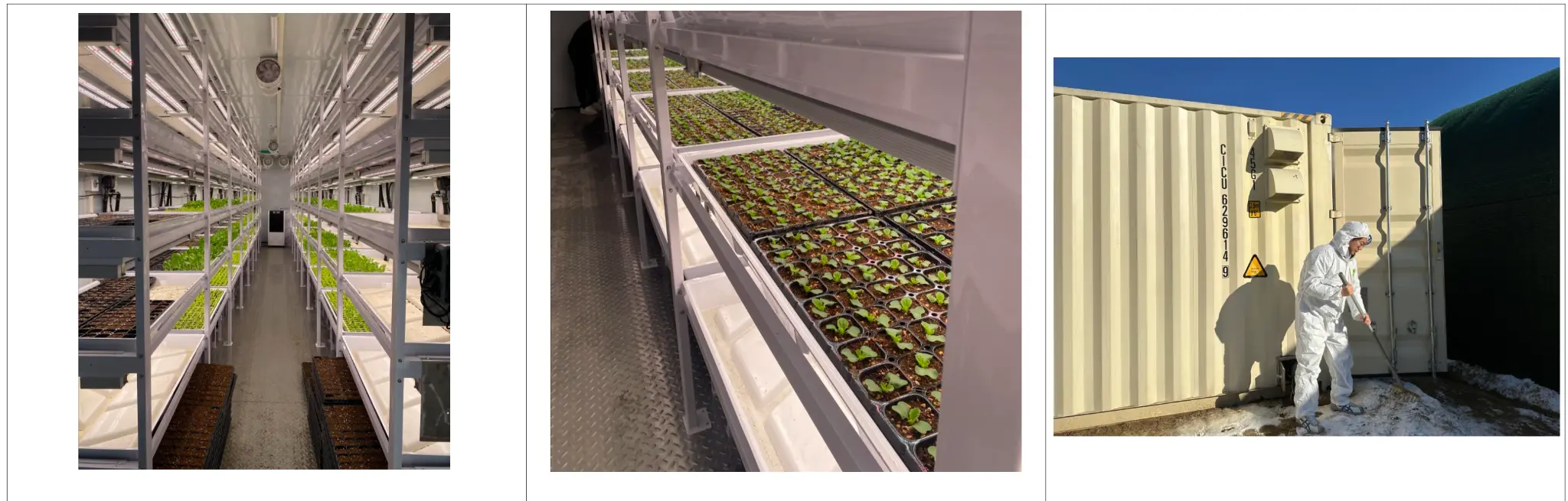
Infarmight’s farms are designed as standardized, containerized units. This modularity is a massive logistical advantage, allowing for rapid deployment via standard shipping channels. A farm can be shipped, installed, and operational in a new country in a fraction of the time required for traditional construction. This standardization also simplifies maintenance and training, as the core technology remains consistent globally.
B. AI-Driven Global Crop Database
The heart of Infarmight’s system is its central AI platform, which collects data from every farm unit worldwide. This creates a massive, self-optimizing global crop database. When a new farm is deployed in a location with unique environmental variables (e.g., high ambient temperature in Dubai or low light levels in Helsinki), the AI can instantly draw on the collective knowledge of the network to fine-tune the nutrient mix, light spectrum, and humidity levels for optimal yield. This “network effect” is a key competitive differentiator, ensuring that every new farm benefits from the experience of all existing farms.

C. Localized Supply Chain Integration
While the technology is global, the inputs are localized. Infarmight’s expansion plan includes establishing local partnerships for non-proprietary inputs, such as nutrient salts and substrates. This strategy reduces shipping costs, minimizes the carbon footprint of the supply chain, and builds goodwill with local suppliers. The only elements that need to be centrally managed are the proprietary hardware and the AI software.
Overcoming Global Hurdles: A Proactive Approach
Global expansion is fraught with challenges, particularly in a capital-intensive sector like CEA. Infarmight has proactively identified and developed strategies to mitigate the most significant hurdles:
1. Energy Consumption and Sustainability
Vertical farming is inherently energy-intensive. Infarmight’s strategy is to commit to 100% renewable energy sources for all new international deployments. This involves:
- On-site Solar/Wind Integration: Where feasible, farm units are paired with dedicated renewable energy generation.
- Power Purchase Agreements (PPAs): Securing long-term contracts with local green energy providers.
- LED Optimization: Continuous R&D to improve the energy efficiency of its custom LED lighting spectrums.
This commitment not only reduces operational costs in the long run but also aligns with the sustainability mandates of target markets and consumers.
2. Regulatory and Permitting Complexity
Agricultural and food safety regulations vary wildly from country to country. Infarmight addresses this through a dedicated Global Regulatory Compliance Team. This team works in advance of market entry to:
- Pre-certify Technology: Obtain necessary certifications (e.g., ISO, local food safety standards) for the modular units before deployment.
- Establish Local Legal Entities: Set up local subsidiaries or JVs to manage permitting and local tax compliance.
- Lobbying and Education: Engage with local governments to educate regulators on the benefits and safety of CEA, helping to shape favorable policy.
3. Talent Acquisition and Training
The operation of a high-tech smart farm requires a specialized skillset that is not widely available. Infarmight’s solution is a two-pronged approach:
- Centralized Digital Training: Utilizing its AI platform to provide virtual reality and simulation-based training for local farm operators.
- “Train-the-Trainer” Model: Deploying a small, highly experienced team of agronomists and engineers to a new region to train the first cohort of local managers, who then cascade the knowledge.
This ensures that local teams can manage the complex technology while maintaining the global standard of quality and yield.
The Vision: A Decentralized Food Future
Infarmight’s global expansion is more than a business strategy; it is a contribution to a more resilient and equitable global food system. By deploying smart farms in urban centers and food deserts, Infarmight is fundamentally changing the relationship between people and their food.
The long-term vision is a world where:
- Food Security is Localized: Every major city has a network of hyper-local farms capable of supplying a significant portion of its fresh produce needs.
- Sustainability is Standard: Food production is decoupled from land use, pesticide application, and excessive water consumption.
- Data Drives Decisions: The global network of farms acts as a living laboratory, constantly optimizing crop genetics and growing protocols for maximum nutrition and minimal resource use.
Infarmight’s journey to bring smart farming to the world is an exciting chapter in the future of agriculture. As the company continues to execute its strategic expansion, it is not just building farms—it is building a new, smarter, and more sustainable foundation for global food production. The world is hungry for change, and Infarmight is ready to deliver.
References: